If you are looking to import food products from Vietnam, choosing the right supplier, understanding import requirements, and preparing the necessary documentation are essential steps for a successful transaction.
However, importing food involves more than simply placing an order. Buyers need to understand their product requirements, verify suppliers, meet destination-market regulations, prepare the correct documents, and coordinate shipping and customs procedures.
This guide explains the key steps to import food from Vietnam, from preparing your sourcing requirements to working with reliable suppliers and completing the import process.
Step-by-Step Process to Import Food Products from Vietnam
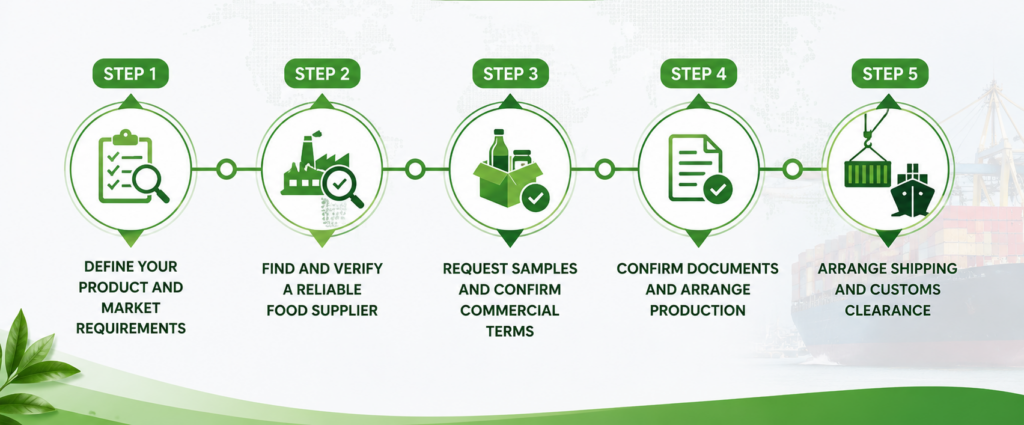
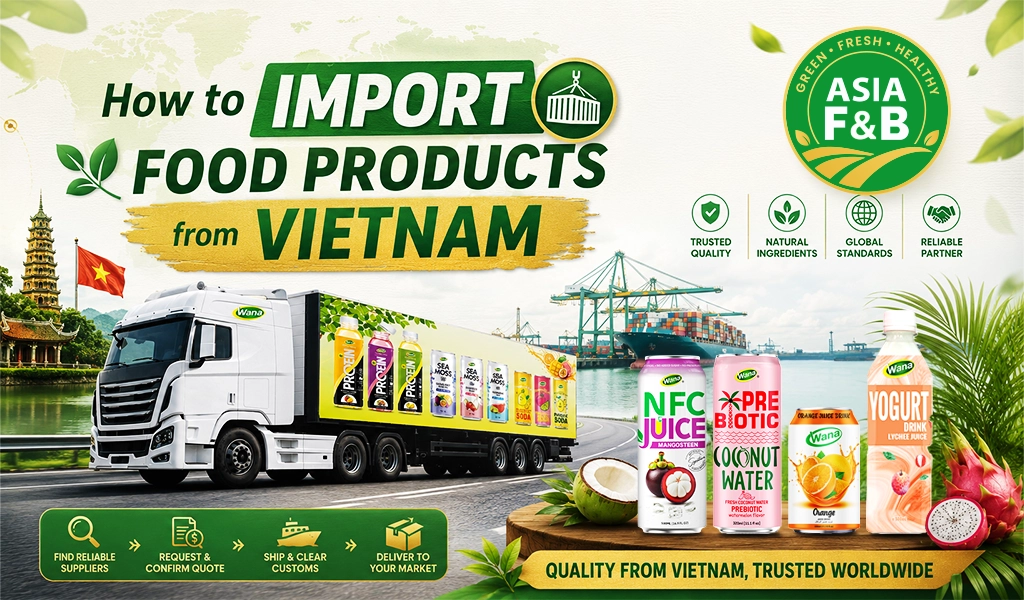
The process of importing food products from Vietnam can vary depending on the product and destination market. However, most B2B buyers can follow these five key steps.
Step 1: Define Your Product and Market Requirements
Start by identifying the product you want to import and its key requirements, such as:
- Product category and specifications
- Ingredients or formulation
- Shelf life
- Packaging
- Target quantity
- Target price
You should also check the food import requirements in your destination market, including food safety regulations, labeling rules, required permits, and product registration.
Step 2: Find and Verify a Reliable Food Supplier
Search for suitable Vietnam food suppliers or food manufacturers in Vietnam based on their:
- Manufacturing and export experience
- Food safety certifications
- Production capacity
- MOQ and lead time
- Packaging and customization capabilities
Request company information, certifications, product specifications, and samples before making a final decision.
Step 3: Request Samples and Confirm Commercial Terms
Evaluate product samples and confirm key details before placing an order, including:
- Product quality and specifications
- Ingredients and shelf life
- Packaging
- Pricing
- MOQ
- Production lead time
- Payment terms
- Incoterms
For OEM, ODM, or private label projects, make sure the final product specifications are clearly agreed upon.
Step 4: Confirm Documents and Arrange Production
Work with your supplier to prepare the required food import documentation and confirm the documents needed for your destination market.
Once everything is approved, production can begin. Buyers should monitor product quality, packaging, and label compliance before shipment.
Step 5: Arrange Shipping and Customs Clearance
Choose a suitable shipping method and work with a freight forwarder or customs broker to arrange transportation and customs procedures.
Depending on the order, you may use:
- Sea freight for larger shipments
- Air freight for smaller or urgent shipments
Review all shipping and import documents before the goods leave Vietnam to help reduce delays during customs clearance.
How to Find Reliable Food Suppliers in Vietnam
Choosing the right supplier is an important step when importing food from Vietnam. Before making a purchasing decision, B2B buyers should evaluate a supplier’s manufacturing and export experience, food safety certifications, production capacity, MOQ, lead time, and product customization capabilities.
It is also important to request product samples and specifications to verify product quality and ensure the supplier can meet your requirements.
For a more detailed guide on how to find reliable food and beverage suppliers in Vietnam, read our complete guide for B2B buyers.
What Documents Do You Need to Import Food from Vietnam?
The documents required to import food from Vietnam depend on the product category, shipping method, and destination market. Buyers should always confirm the exact requirements with relevant authorities or experienced customs and logistics professionals.
Commercial Documents
Common commercial documents include the Commercial Invoice, Packing List, and Sales Contract or Purchase Order. These documents provide key information about the buyer and seller, products, quantities, prices, payment terms, and delivery conditions.
They are commonly used to confirm the transaction and support shipping and customs procedures.
Shipping Documents
Depending on the shipping method, buyers may need a Bill of Lading (B/L) for sea freight or an Air Waybill (AWB) for air freight. These documents contain important information about the shipment, carrier, consignee, and transportation arrangements.
Shipping documents are essential for moving goods internationally and are commonly required during customs clearance and cargo collection.
Certificates and Product Documents
Depending on the product and destination market, buyers may also need several certificates and product-related documents. A Certificate of Origin confirms where the goods were produced or manufactured, while a Certificate of Analysis provides information about product testing and quality specifications.
Certain food products may also require a Health Certificate or a Phytosanitary Certificate, particularly for products subject to specific health or plant-related regulations. Buyers may also need product specifications, food safety certificates, and other product-specific certificates to demonstrate compliance with market requirements.
Destination-Market Documents and Approvals
In addition to export documents, some countries may require buyers to obtain import permits, complete product registration, or secure approval for product labels before goods can enter the market. Additional food safety documentation or market-specific certificates may also be required depending on local regulations.
Because food import requirements vary by country and product category, buyers should confirm all requirements with the relevant authorities or import professionals before production and shipment.
Common Challenges When Importing Food from Vietnam
Importing food products from Vietnam can involve several challenges that B2B buyers should consider before placing an order:
- Finding a reliable supplier: Ensuring consistent product quality, production capacity, and export experience.
- Meeting import regulations: Complying with food safety standards, ingredient restrictions, and market-specific requirements.
- Documentation errors: Preparing accurate commercial, shipping, and food import documents.
- Labeling and packaging compliance: Meeting destination-market requirements for ingredients, nutrition information, allergens, and product labeling.
- MOQ and production lead time: Managing minimum order quantities and production schedules, especially for customized products.
- Shipping and logistics delays: Handling freight schedules, customs procedures, inspections, and potential transportation delays.
Understanding these challenges early can help buyers plan their sourcing and import process more effectively.
How Asia F&B Can Support Your Food Import Business
For B2B buyers looking to import food products from Vietnam, Asia F&B provides a range of food and beverage products and export support for international markets:
- Wide product range: Supplying beverages and foods, including fruit juices, coconut water, aloe vera drink, processed foods,… See more of our products here.
- OEM, ODM, and private label services: Supporting customized products based on your brand and market requirements.
- Flexible MOQ: Offering suitable order quantities to support different business needs and market entry plans.
- Product and packaging customization: Supporting customized flavors, formulations, packaging, and labels.
- International certifications: Available certifications include HACCP, ISO 22000, FSSC 22000, BRCGS, Halal, and other certifications depending on the product and market requirements.
- Export support: Assisting international buyers with relevant product information, documentation, and export preparation.
By working with Asia F&B, B2B buyers can source food and beverage products from Vietnam while receiving support throughout product selection, customization, production, and export preparation.
FAQs About Importing Food Products from Vietnam
Can I import food products directly from Vietnam?
Yes. Businesses can import food products directly from Vietnamese suppliers or manufacturers, provided they comply with the food import regulations and customs requirements of their destination country.
How long does it take to import food from Vietnam?
The timeline depends on product development, order quantity, production lead time, shipping method, destination, and customs procedures.
Can I import private label food and beverage products from Vietnam?
Yes. Many Vietnamese manufacturers offer private label, OEM, and ODM services for international buyers. Depending on the project, buyers can customize products, flavors, formulations, packaging, and labels. It is important to confirm product specifications, MOQ, production timelines, and market requirements before placing an order.
What shipping methods can I use to import food products from Vietnam?
Food products can be imported by sea freight, air freight, road, rail, or multimodal transport. Sea freight is generally suitable for larger orders, while air freight may be a better option for smaller or time-sensitive shipments. The most suitable method depends on the destination, order volume, delivery timeline, product shelf life, and storage requirements.
In Conclusion
Importing food products from Vietnam involves choosing the right supplier, meeting import requirements, preparing documents, and arranging shipping. With careful planning and the right manufacturing partner, B2B buyers can make the process more efficient.
Looking for a reliable food and beverage supplier in Vietnam? Contact Asia F&B to explore our products and discuss your sourcing requirements.